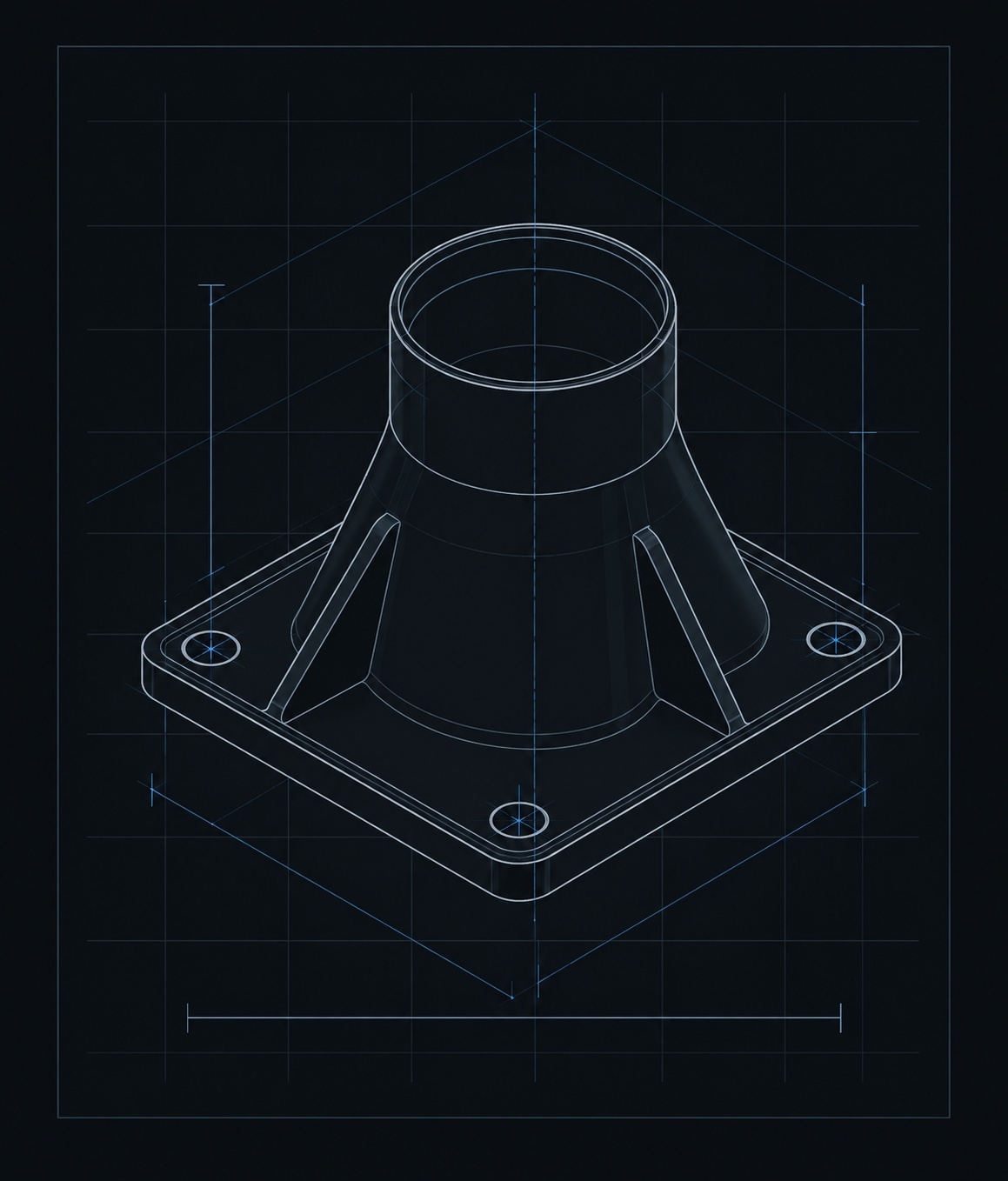
Design
Start with a problem, sketch, sample, or CAD model. We define the fit, function, material needs, and a design made for additive manufacturing.
- CAD development
- Reverse engineering
- Design-for-additive review
01 Custom CAD + Polymer Manufacturing
From a worn component, rough sketch, or CAD file to a finished polymer part—without tooling costs or minimum quantities.
[ WHY ADDITIVE ]
Conventional manufacturing makes sense at scale. For one critical bracket, an obsolete cover, or ten custom assembly aids, it often doesn’t. That gap is where we work.
02 One connected workflow
Design decisions and manufacturing realities stay connected from the first measurement to the final component.
Start with a problem, sketch, sample, or CAD model. We define the fit, function, material needs, and a design made for additive manufacturing.
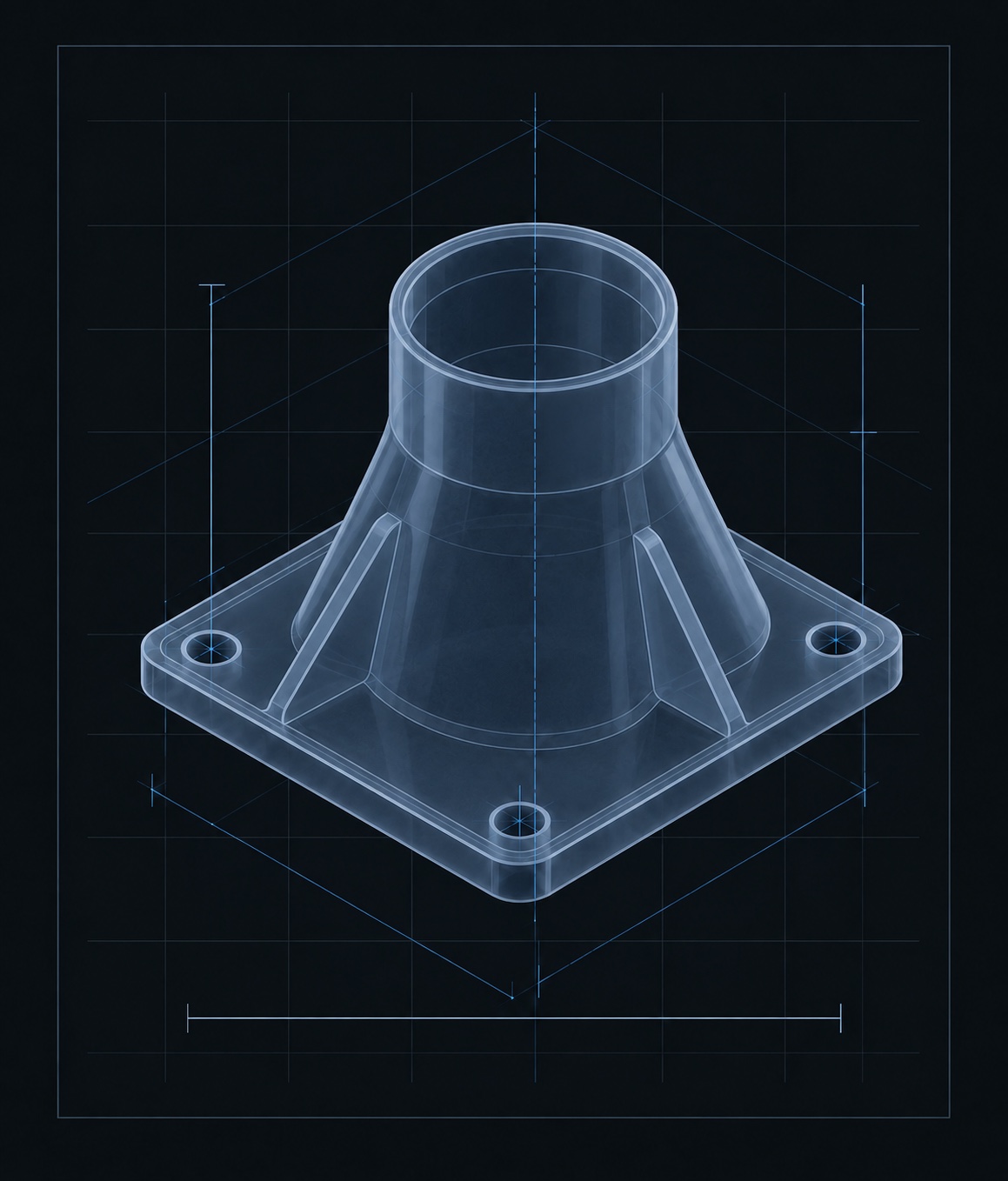
Build and evaluate quickly. We use physical feedback to refine geometry, interfaces, clearances, and usability before production.
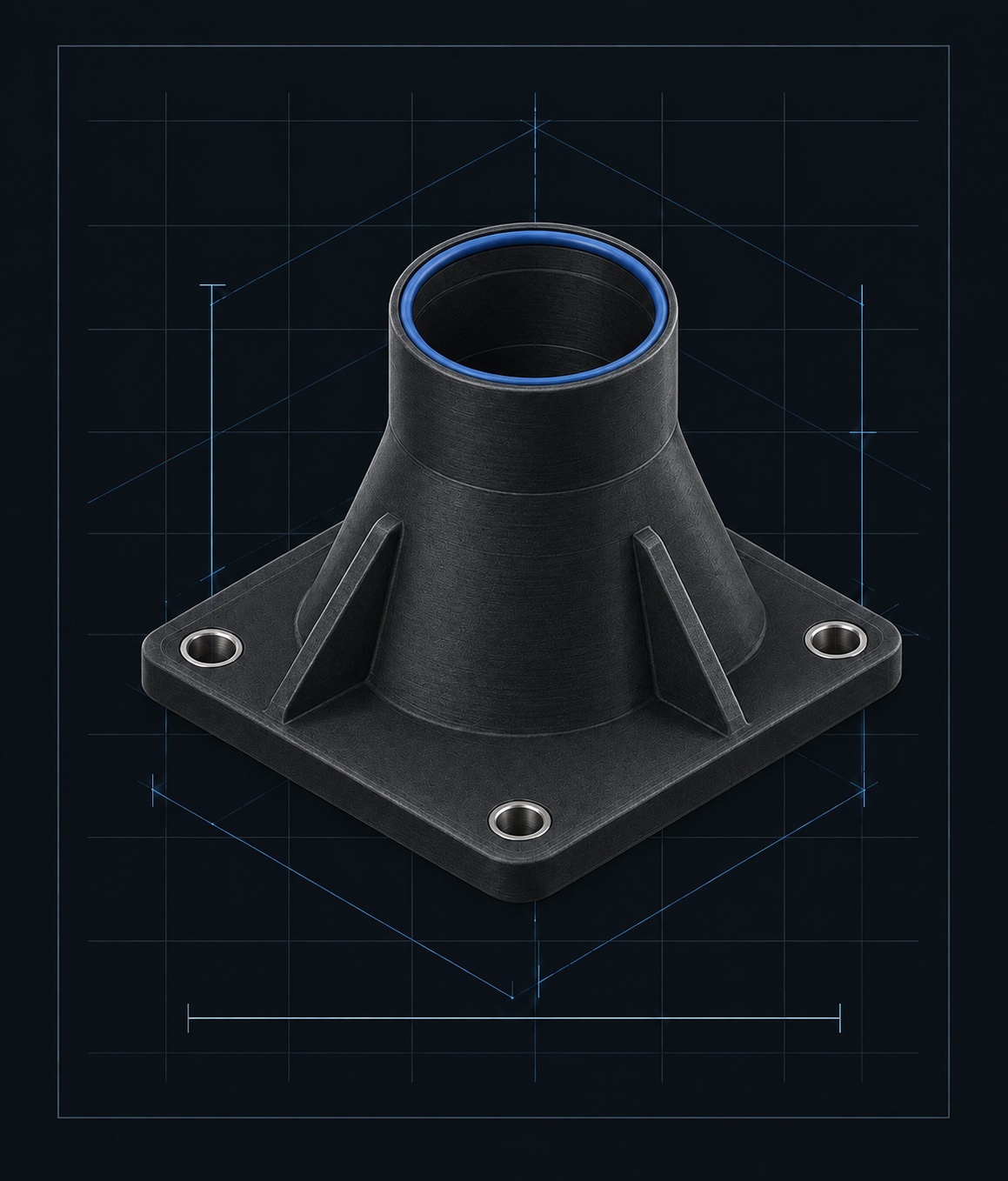
Manufacture the validated design as a one-off or short run, with consistent documentation for straightforward repeat orders.
03 Problems we solve
Useful parts do not need to justify a tooling budget. We focus on practical components that remove friction from maintenance, assembly, testing, and production.
Discuss your applicationTask-specific tools that improve repeatability, positioning, inspection, and assembly.
Polymer components that are discontinued, unavailable, or uneconomical to source.
Purpose-built interfaces between equipment, sensors, tools, and existing hardware.
Custom-fit protection and organization for electronics, controls, and mechanisms.
End-use parts in quantities where conventional tooling is difficult to justify.
04 Applications
Every project starts with the operating requirement—not a catalog of machines. These are the kinds of challenges the process is built for.
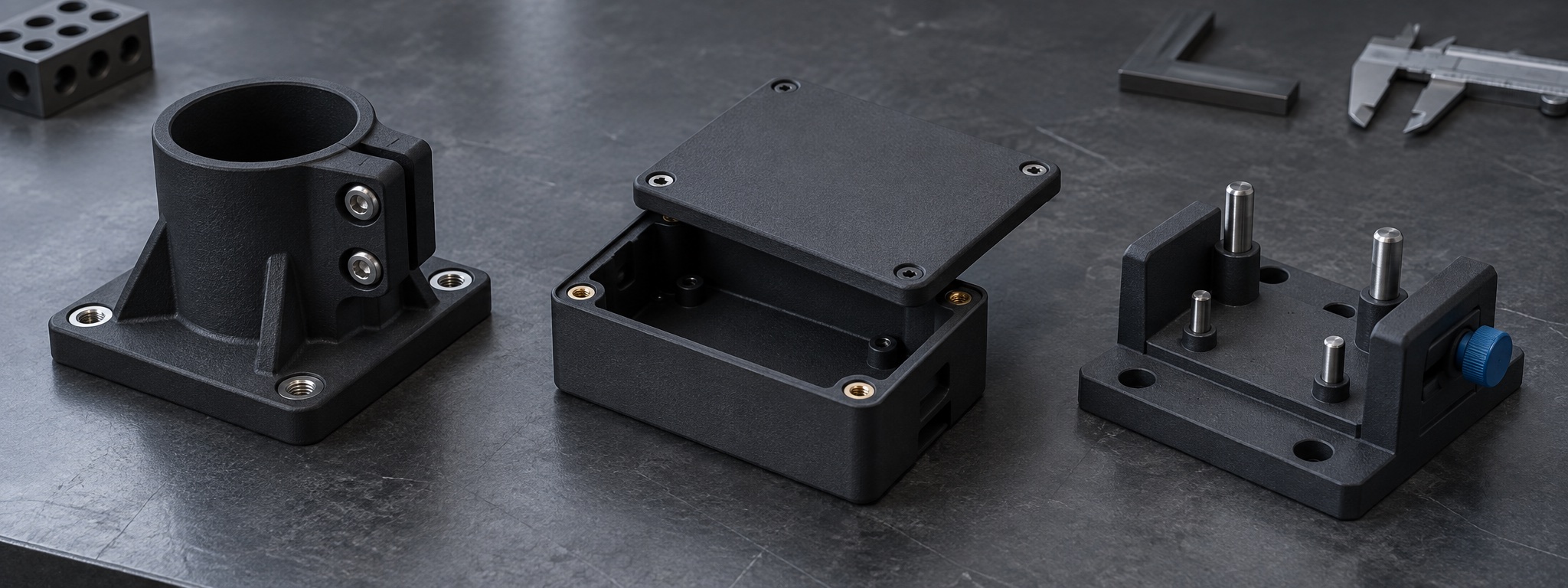
Ergonomic, repeatable tools shaped around your product and process.
Positioning fixtures · Drill guides · Inspection aids
Recreate unavailable polymer components from a physical sample.
Covers · Knobs · Guides · Machine components
Test form and function, refine the design, then produce what you need.
Fit checks · Functional prototypes · End-use parts
05 About Upstate Additive
Upstate Additive is an independent Upstate South Carolina business focused on practical polymer parts for applications where traditional production tooling does not make sense.
The work is informed by a background in materials engineering, professional experience in the aerospace sector, and substantial hands-on experience in CAD design and additive manufacturing. That perspective shapes a disciplined approach to requirements, iteration, material selection, and documentation.
Upstate Additive provides design and manufacturing services for polymer components. Services are not represented as licensed Professional Engineer services.
06 Start a project
Send a few details and whatever you have: photos, measurements, a sketch, a sample part, or an existing CAD file.
01What does the part need to do?
02Where and how will it be used?
03How many do you need?
04What reference material can you share?